
Anson 72 Hour Release Status
No official Anson County Sheriff page displays a rolling 72-hour release list. Southern Software Citizen Connect provides Current Confinements, admission date-range tools, Charges, and Arresting Agency controls. Its quick choices include the last seven days of admissions. Seven-day admissions are not three-day releases. An admission marks the start of a jail episode, while a release or transfer marks the end of the Sheriff’s physical custody.
For a real three-day result, request an existing release ledger for a precise period or ask about one named booking. Include both dates and clock times. The answer should state when the person left, the recorded disposition, and whether another agency received the person.
The official Anson County Jail page identifies the jail contact route and booking-search link.
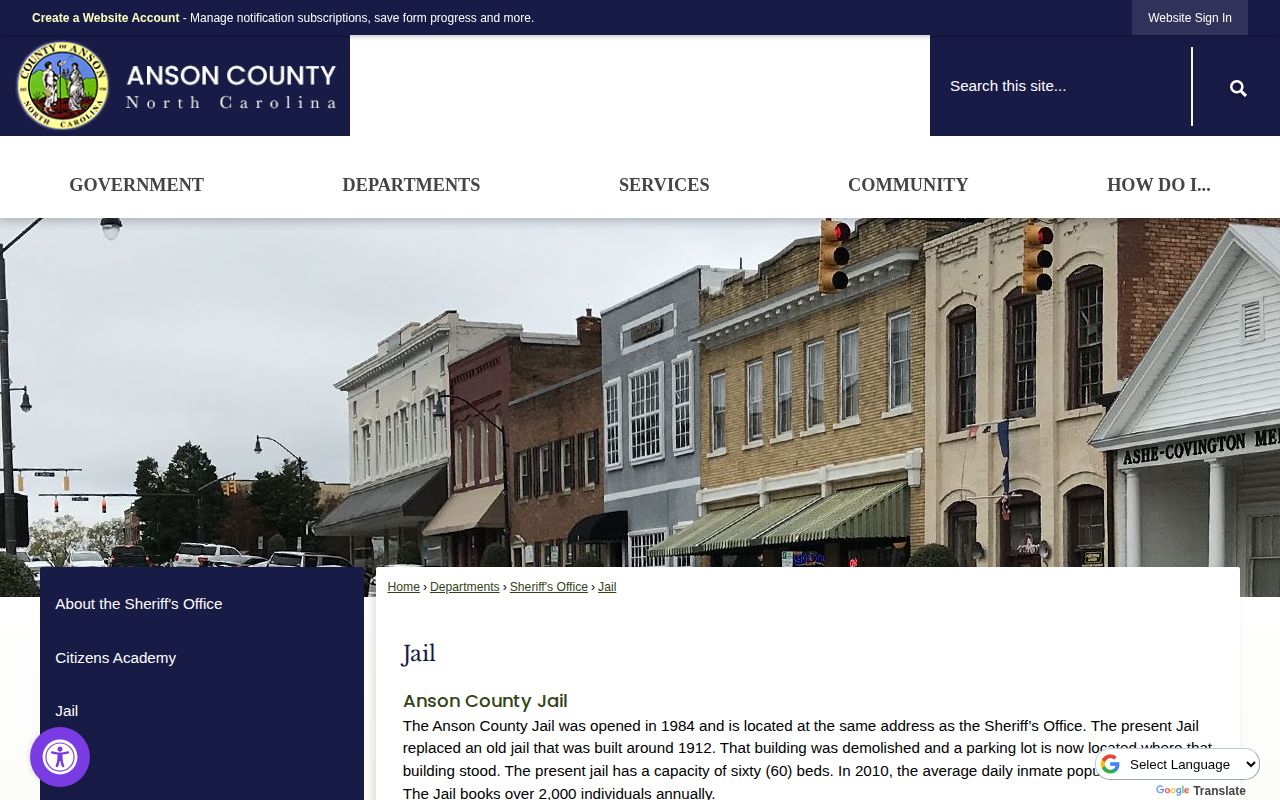
The county source establishes where to ask when no public three-day release feed exists.
Check Anson Three-Day Releases
Define the interval first. “Last 72 hours” changes by the minute, while “Friday at noon through Monday at noon” is stable. Identify the booking with a full name, date of birth, approximate admission date, and booking number. Current Confinements can rule in a local match, while admission records may supply an identifier. Neither gives an affirmative release event.
- Write the exact beginning and ending date and time.
- Check Current Confinements and save the access time.
- Use admission search only to find the booking number.
- Call Anson County Jail at 704-694-9328.
- Ask for release time, disposition, and destination.
- Request an electronic record when written proof is needed.
For only today’s period, use the Anson County released last 24 hours workflow. Do not infer release from silence.
Note: A fixed start and end time gives jail staff a clearer records interval than a moving “last three days” request.
Anson 72 Hour Record Fields
There are no published 72-hour feed fields, cadence, or retention terms because the feed itself is absent. A requested ledger or named-person record should answer what a useful release list would answer. Ask for existing fields rather than asking staff to build a new analysis.
| Field | Use |
|---|---|
| Name and booking number | Ties the movement to the correct person and episode. |
| Admission date and time | Separates an old booking from a readmission. |
| Release date and time | Places the exit inside the defined period. |
| Release type | Records the maintained reason or disposition. |
| Destination | Distinguishes community release from transfer. |
| Releasing facility | Confirms which agency owned the event. |
A court order explains legal authority. The jail log records when staff carried it out and where the person went.
Anson Weekend Release Verification
A three-day window helps around weekends because a calendar-day check can miss an event. Yet Anson publishes no weekend or holiday release procedure, routine hour, gate location, or guaranteed schedule. Staff may need to verify an order, complete processing, return property, or resolve another hold. A court entry saying “time served” can establish the legal result while the person remains briefly in the building.
Another county warrant, DAC commitment, federal process, or immigration detainer can change the destination. Ask whether the order was executed and whether the exit was into the community. For one person, the Anson County released inmate search reconciles jail, court, and correctional records.
Note: Weekend timing should be confirmed from the actual movement record because Anson publishes no routine release schedule.
Request Anson Release Ledgers
Call the jail administrator at 704-694-9328 to identify the custodian and delivery channel. The Sheriff’s Office is at 119 N. Washington Street, Wadesboro, NC 28170. Its main number is 704-694-4188, fax is 704-694-9156, and posted hours are Monday through Friday, 8:30 a.m. to 5 p.m. No sheriff-specific online form, fixed fee schedule, or fixed response period was found.
A ledger request should name exact start and end times and ask for maintained release fields. A named request should add date of birth, alias, booking number, and admission date. Ask for electronic copies, a cost estimate before chargeable work, and the basis for any withheld part. If no entry is found, ask about another surname or transfer.
The Sheriff’s official contact page provides the request route.
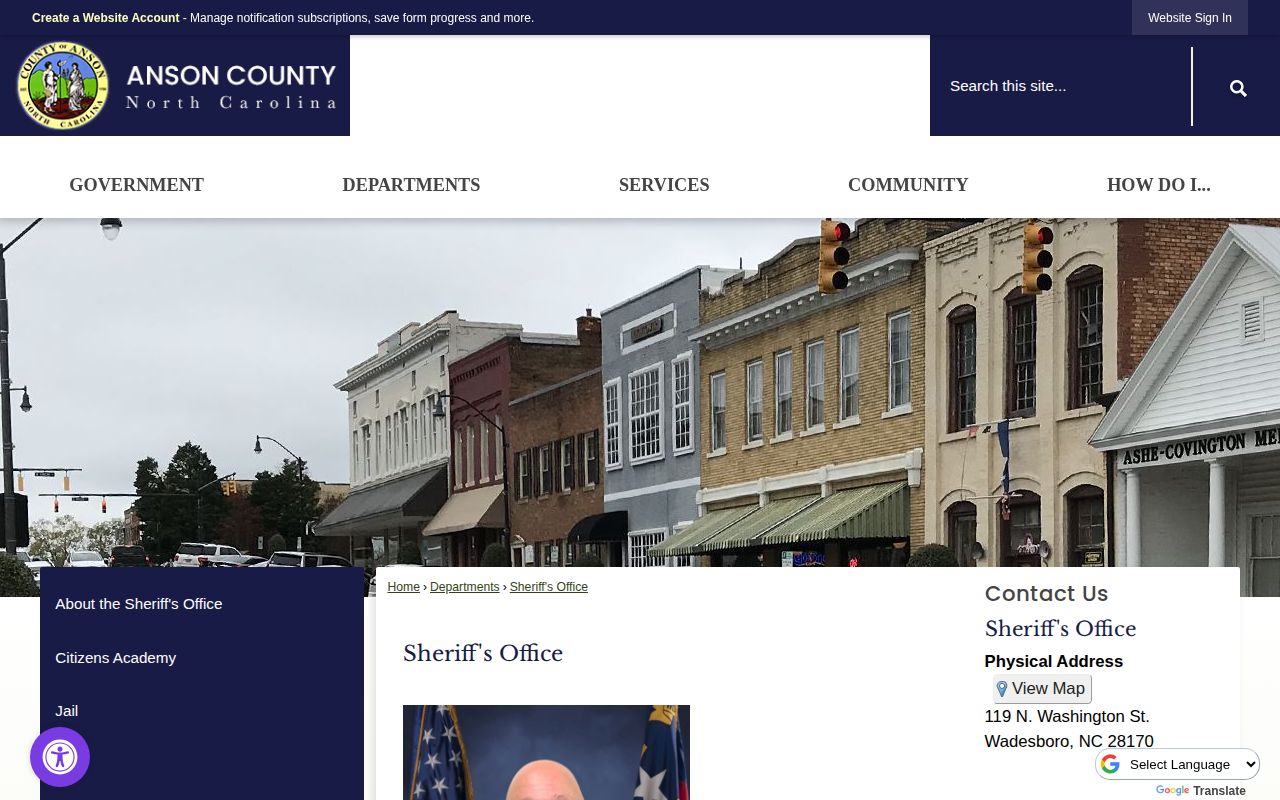
The official contact is the fallback for a release interval the portal does not publish.
Anson Release Portal Quirk
Citizen Connect shows “Get Last 24 Hour Admits” and “Get Last 7 Days Admits” but no visible Releases tab. A source-code placeholder is not an active public feature. A seven-day admission report may include someone still held, later transferred, or already back in the community. It can omit someone released during the requested three days when the admission occurred earlier.
The official Citizen Connect portal shows the controls that are available.
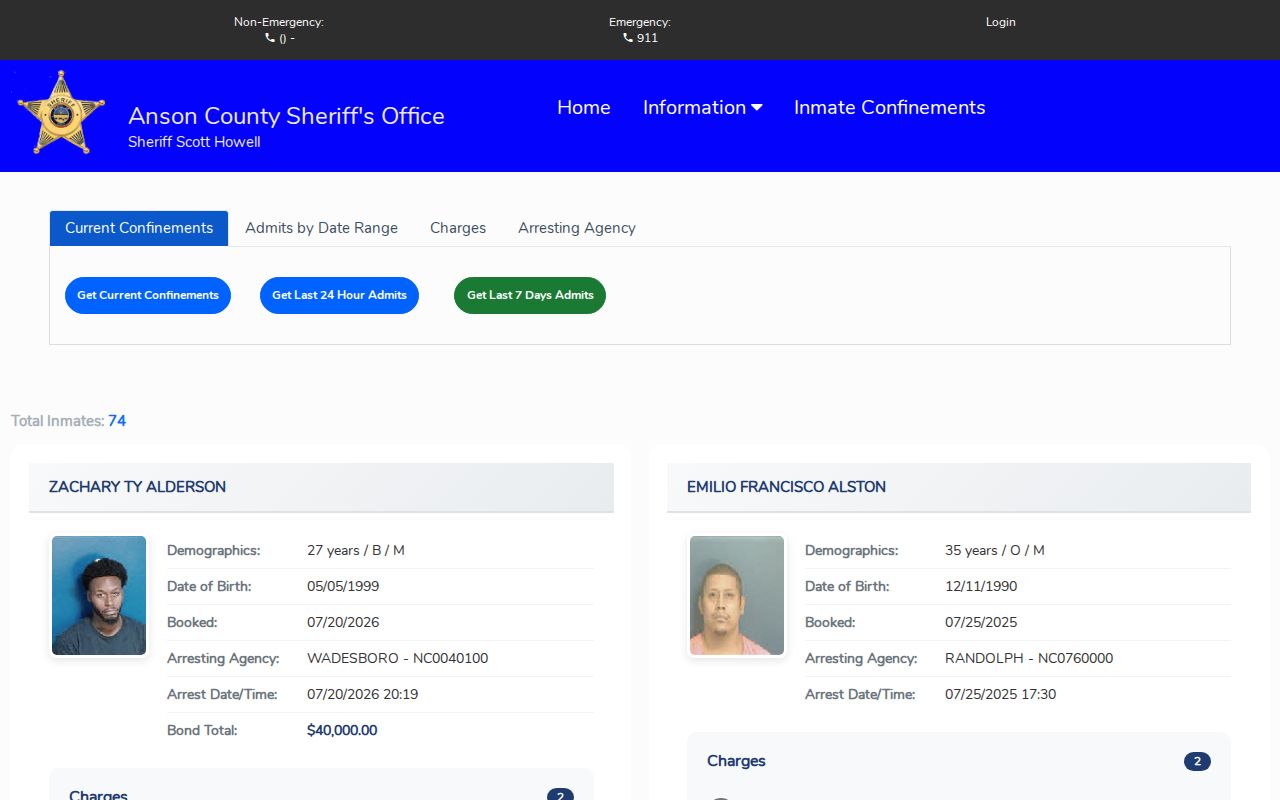
The screenshot preserves the key distinction: each quick time-window button is labeled “Admits.”
Note: The dynamic portal carries no county update guarantee, so record the search time and confirm each movement directly.
Anson Releases Across Systems
A Sheriff record may say transfer to the North Carolina Department of Adult Correction. That ends county-jail custody but not incarceration. DAC Offender Public Information should then be checked for inmate status, location, last movement, Actual Release Date, and community-supervision status. NC SAVAN or VINELink can provide custody-change alerts, but it is not the release order or a permanent ledger.
Federal sentenced custody belongs in the Bureau of Prisons locator. A pretrial federal movement requires the court docket plus the physical custodian or U.S. Marshals Service. Possible ICE custody needs the ICE locator and agency confirmation. “No result” remains unresolved until identity, agency, and destination agree.
State discharge records follow the official DAC public-records instructions.
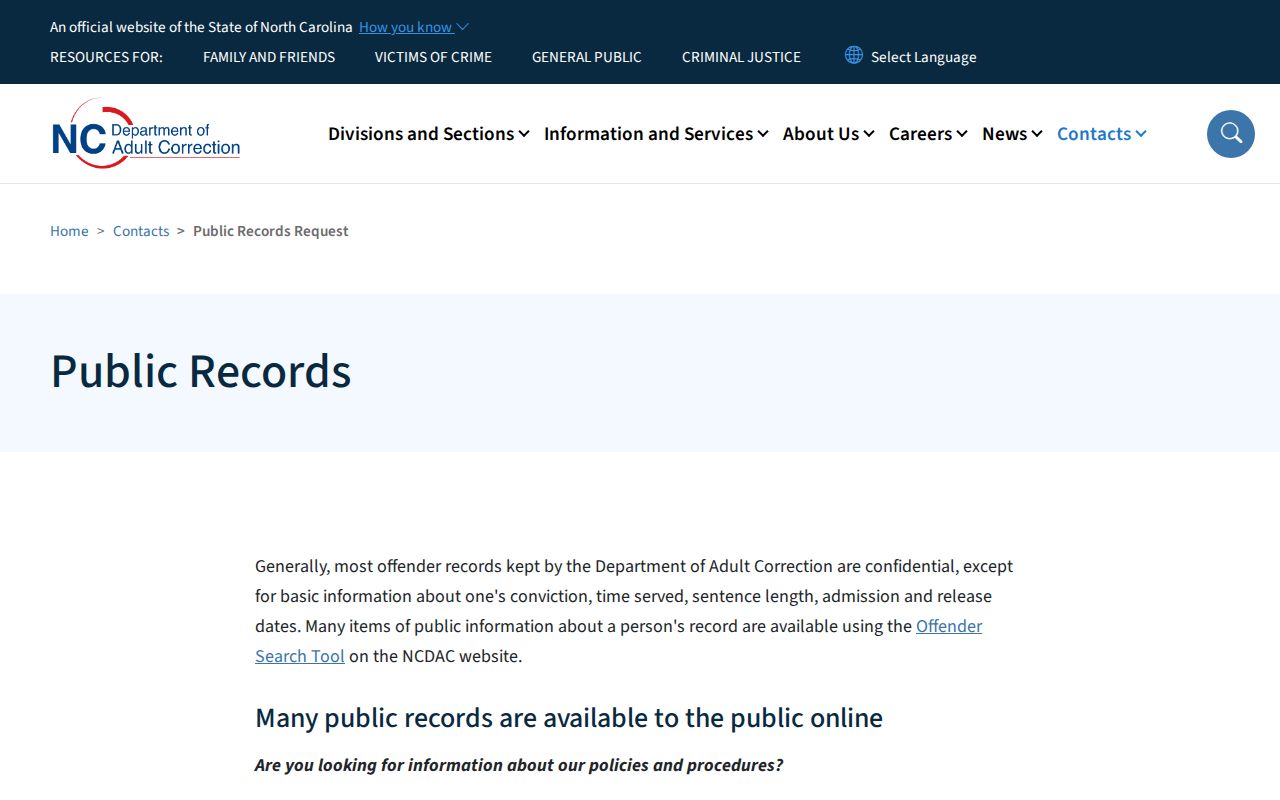
This state route applies to DAC records, not to a county-jail release ledger.
Interpret Anson Release Outcomes
A useful record identifies who left, the custody that ended, when movement occurred, the reason, and what came next. Bond, a court order, dismissal, time served, sentence expiration, or probation may result in a community exit. Transfer to DAC, another county, USMS, or ICE means the person left Anson County Jail but remained in government custody. Hospitalization, escape, or death are also departures that must not be described as ordinary community release.
State-prison data needs a different reading. Projected Release Date is an estimate. Actual Release Date, last movement, inactive prison status, and separate community status provide retrospective evidence. “Inactive inmate” does not mean there is no parole, probation, or post-release supervision. Match the system to the event and preserve the agency wording.
Anson Release Records Under Law
G.S. 132-1 broadly defines North Carolina public records, while G.S. 132-6 provides for inspection and copies at reasonable times and allows prescribed fees. These rules support a focused request for existing Anson release information. They do not require the Sheriff to create a new 72-hour web feed or compile a custom analysis that the office does not maintain. Response timing is contextual, so no fixed number of days should be promised.
Public access also has limits. Juvenile, sealed, expunged, medical, security, victim, supervision, and correctional operational material can be restricted. Criminal-investigation rules may affect some underlying records. A partial response can still verify the key event if it supplies the person identifier, release time, disposition, and public destination. Preserve the exact office wording and any stated basis for redaction.
Online retention is separate from file retention. Anson publishes no duration for a release list because it publishes no such list. A live card disappearing does not prove that the agency destroyed the booking or movement record. When an older record is not online, ask the custodian what remains and how it can be inspected or copied.
A request can also resolve conflicts between systems. If Citizen Connect still shows confinement after jail staff confirms departure, record the screen time and the staff-confirmed movement time. If a court order appears before the physical exit, ask when staff executed it and whether a second hold delayed release. When the Sheriff reports a transfer, request the receiving agency if that field is public, then continue the search in that agency’s official system. These steps preserve the difference between a legal order, a database update, and an actual movement through the jail door.
Keep a short verification trail for the full 72-hour inquiry. Record the URLs used, search fields, date and time, exact status label, person identifier, office contacted, and document requested. Save only the details needed to confirm the event. Similar names, aliases, date-of-birth errors, delayed entries, and cross-county custody can otherwise produce a false match. An official written response is stronger than an undated screen, especially when the result will be used in a court filing or to reconnect with the released person.